
HT/LT Electrical Works: Services, Applications and Safety Standards Explained
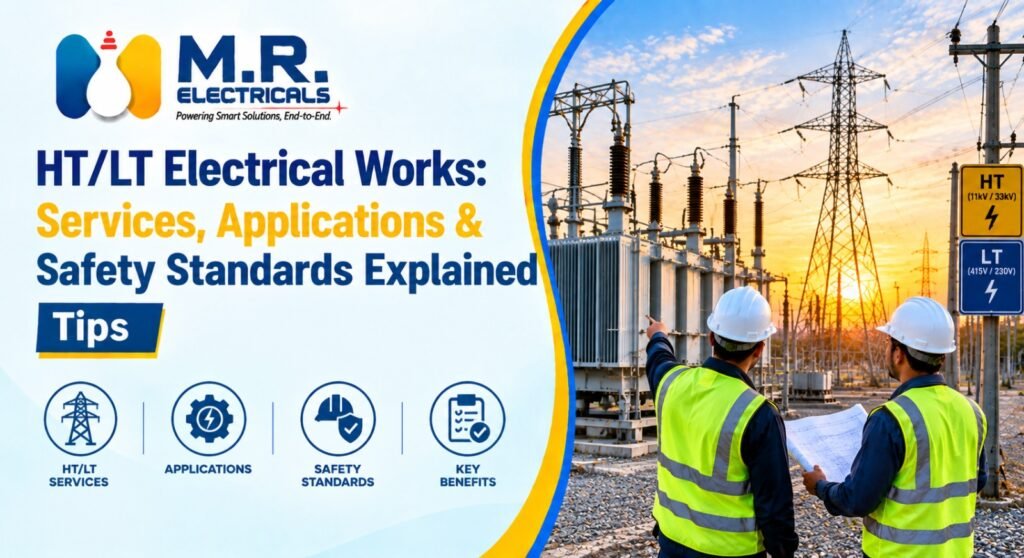
Powering Up Electrical works are the backbones of power supply to all types of buildings residential commercial industrial and large infrastructure projects. Be it distribution of power within factory premises or the power back-up to office buildings, electrical systems need to be planned, installed, and maintained with precision. This is where HT / LT Electrical works come into play.
What is Low Tension and High Tension? To explain it simply, we use the term HT (High Tension) for high voltage power supply systems. LT (Low Tension) is the term we use for the low voltage distribution system. These high tension and low tension power distribution systems are essential to distribute electricity in a safe and efficient way in an industrial area.
What Are HT/LT Electrical Works?
HT/ LT Electricals is the installation testing commissioning and maintaining the electrical power distribution system connecting the low voltage and high tension (HT) to the electricity supply system for buildings, equipment, and machinery.
HT systems are generally used at industrial plants and large commercial projects to receive and distribute electricity at high voltages. LT systems are used to distribute energy at low voltages for powering lighting computers air conditioning units, machinery, and other electrical appliances.
Typical LT supply voltages are 230 V (single-phase) and 400 V (three-phase) whereas typical HT supply voltages are as per the application and distribution system.
Major Services Included in HT/LT Electrical Works
Commercial electrical contractors offer many services to help a safe and consistent power supply.
1. HT Electrical Installation
HT electrical installation HT electrical installation calls for the installation of the high voltage electrical system and equipment needed for receiving the electrical power and distributing electrical power. This can include services like the HT cable laying, installing switchgear, protection systems and electrical equipment.
These installations need specialised expertise, licensed equipment and implementation per the relevant safety standards for electrical systems.
2. LT Electrical Installation
What are LT electrical works? LT electrical works are the construction jobs, which include all the wiring, distribution boards, cables supports and lighting system, power sockets and protection devices etc. The LT electrical works provide us safe way of carrying electricity at different locations of a building or any industrial establishment.
Proper circuit design and load placement reduces faults and improves efficiency of energy.
3. Transformer Installation and Maintenance
Transformers work to increase or decrease the electrical voltage as needed. Transformer installation earthing protection arrangements, testing, and preventive maintenance can all be part of the HT/LT electrical project.
Regular inspections will detect signs of overheating, degradation of insulation, and other issues before they lead to complete failure of your equipment.
4. Testing and Commissioning
Testing and commissioning the electrical installation must be properly tested and commissioned before it is put into service. This will include insulation resistance tests, protective relay tests, earthing tests, cable testing, functional tests etc.
These processes ensure correct equipment operation and correct operation of the protection system.
Applications of HT/LT Electrical Works
HT/LT Electrical works are used across several industries and infrastructure projects.
- Industrial plants: Factories require reliable power distribution for production machinery, motors and heavy equipment.
- Commercial buildings: Offices, shopping centres, hotels and hospitals depend on properly designed electrical distribution systems.
- Residential developments: Large housing projects require electrical panels, distribution networks, transformers and safe internal wiring.
- Infrastructure projects: Airports, railway facilities, warehouses and other public infrastructure require dependable electrical installations.
- Renewable energy projects: Solar power plants and other energy installations may require HT/LT systems to connect generation equipment with distribution networks.
The design of each installation depends on electrical load requirements, supply conditions, site layout and applicable regulations.
Important Safety Standards for HT/LT Electrical Works
Electrical safety should be maintained during the installation, operation, and maintenance of equipment. Regulations, which may apply in India include safety requirements of the Central Electricity Authority (CEA), the relevant Indian Standards and those of the local electricity distribution company.
Important safety practices include:
1. Correct earthing: an efficient earthing system ensures that the fault current is safely carried away and the protection devices function correctly.
2. Suitable protection devices: Circuit breakers, fuses, relays, and other protection devices should be chosen, dimensioned, and verified correctly.
3. Electrical PPE: Appropriate electrical PPE, tools and arc-rated protective equipment should be used by personnel who are trained to work safely with exposed electrical systems (where required by the risk assessment).
4. What do you need to do? Isolation and lockout of electrical equipment: Electrical equipment is isolated, verified dead, and properly secured with a lock or other means before being worked on.
5. Inspections: Periodic inspections on cables panels transformers, earthing, and protective devices can prevent hazards occurring.
6. Qualified workers: HT connections and other mandated works must be carried out by qualified and authorised persons.
Verify what applicable requirements are required for the particular installation, voltage level and project location.
Tips for Choosing an HT/LT Electrical Contractor
THE RIGHT CONTRACTOR making the right decision in choosing a contractor can make a big difference to the quality, safety, and durability of a project. Here’s what you should consider.
- Experience: Verify how experienced the contractor is with projects of similar size and scope.
- Regulatory compliance: Check relevant licences, authorisations, and approvals.
- Equipment quality: cables, panels, transformers, and protection devices should be the right specifications.
- SCOPE OF WORK: Verifying that testing, commissioning, and documentation are within the scope of work.
- Maintenance support: make sure your contractor can offer inspections, troubleshooting, and preventive maintenance when necessary.
A comprehensive quotation and clear project scope can also steer clear of unexpected costs and delays.
Conclusion:
HT/LT electrical works form the foundation of safe and dependable power distribution in industrial, commercial, and residential environments. We undertake tasks like transformer installation, cable laying testing, commissioning, and preventive maintenance, all requiring technical expertise and careful attention to safety.
When business owners learn about the services provided, determine the unique needs of the project, and find a proficient electrical contractor, they will have more reliable electrical and less risk of production interruptions. Always adhere to safety standards, and keep all electrical equipment and fixtures maintained regularly to ensure smooth operation.